
Stucco built to outlast the weather.
Pick a texture and a color on the sample house, drag the sun across it and watch the three coats go on. It is the fastest way to know what you want before a ladder ever touches your wall.
- Photo estimates, no pressure
- Hand-finished textures
- 28 Middle Tennessee cities
- Look
- --
- Hides flaws
- --
- Cleaning
- --
- Cost vs smooth
- --
- Our take
- Press Apply the coats
Change the texture or color and the finish coat is troweled on again. Drag the sun to watch the shadows move across the surface.
- Built in layersBarrier, lath and three honest coats.
- Water-smart detailsFlashing and drainage done first.
- Photo estimatesItemized, in writing.
- Middle Tennessee wide28 cities, one crew standard.
48 services, eight families.
From a hairline crack in Franklin to a full three-coat wall in Brentwood, an EIFS repair in Murfreesboro or a plaster fireplace in Nashville, every kind of stucco job has its own page of details, steps and answers.
Every layer, named and explained.
Pick a system, tap the numbered dots and press Replay the build to watch the barrier, lath, scratch coat, brown coat and finish build up from the framing out.
What will it cost? Get a planning range.
Choose the system, slide to your wall area, add stories, finish and tear-off and see a price range with a breakdown of labor, materials and access.
Size up the wall
Planning ranges come from commonly published stucco prices, adjusted for height, finish and demolition. Your real price depends on the condition of the wall, the number of openings, access and the details.
- Labor
- Materials
- Prep and access
- Crew time
- Cure and weather
- Per square foot
- Good to know
Saved. It will travel with your estimate request below.
Is that crack serious? Read it like a pro.
Pick the pattern, the width and where it is, and see a likely cause, how urgent it is and the usual fix, with a drawing of your crack on a sample wall.
What does the crack look like?
A guide, not a diagnosis. Only a person standing at the wall can tell you for sure, and a moisture reading settles most questions.
From cracked and stained to sealed and seamless.
Drag the handle to compare a worn wall with the repair: cracks routed and sealed, texture patched and matched, fresh sealant and a clean base.
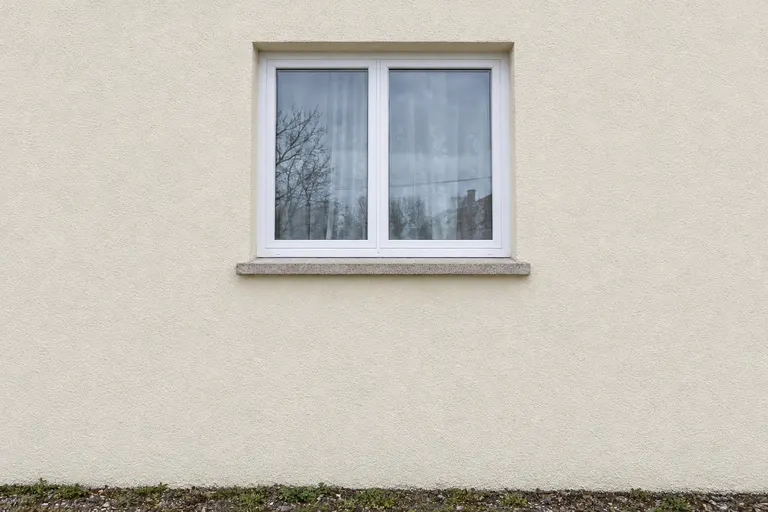
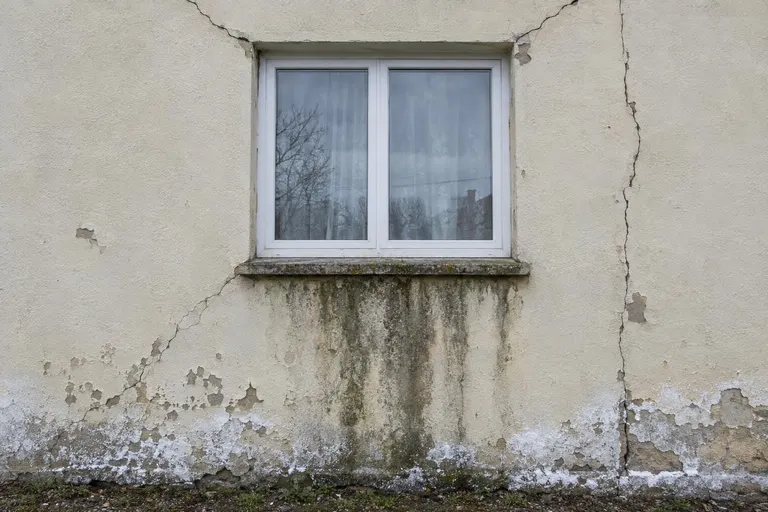
Six steps, start to finish.
Follow the coats from the first call to the last walk-through. Every step is explained in advance.
Step 1 of 6
- 01
Call or text
Tell us what you see, where it is and send a photo or two. A picture is the fastest way to get the right person and the right questions.

Photo first - 02
Look and measure
We walk the wall, tap for hollow spots, read moisture, measure and agree on the plan and the price before any mud is mixed.
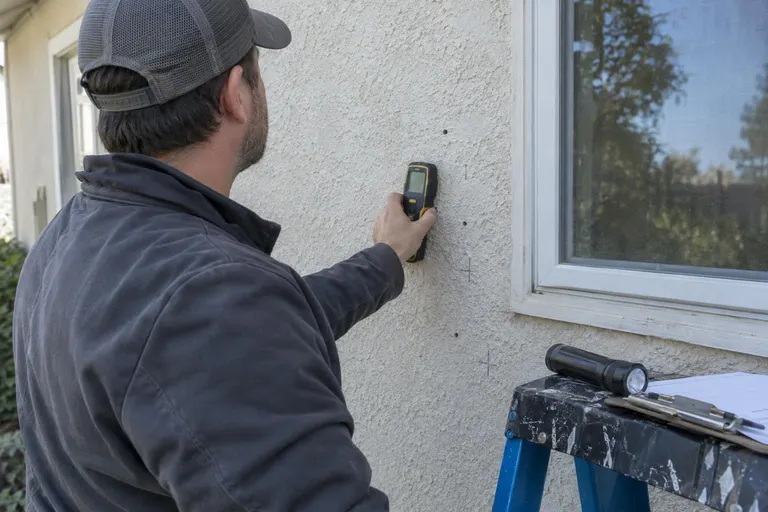
Plan and price agreed - 03
Barrier and lath
Weather barrier, flashing, lath, screed and joints go on first, because the best stucco starts behind the stucco.
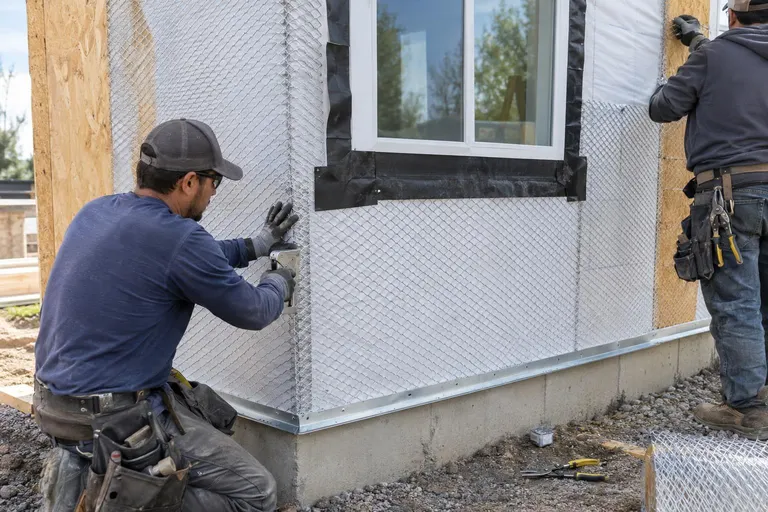
Built behind the finish - 04
Coat by coat
Scratch coat, brown coat and the finish coat are applied, floated and cured in order, each one given the time it needs.
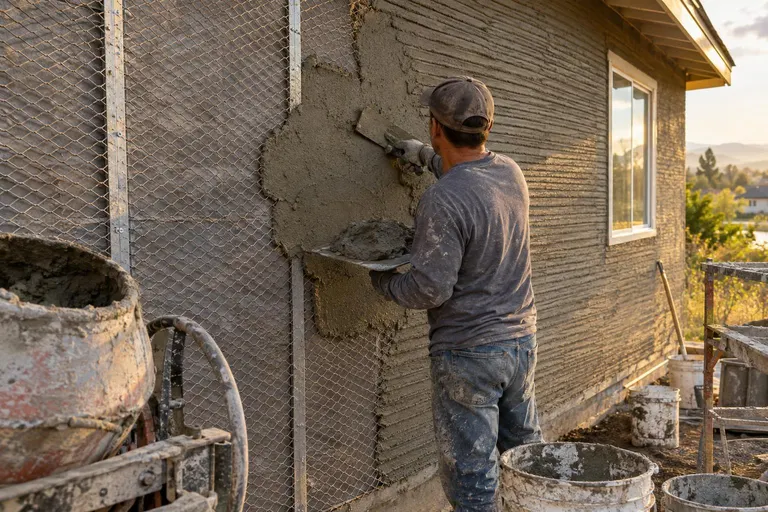
Honest thickness - 05
Texture and color
The finish is troweled, floated or sprayed to your approved sample, then protected so it cures evenly.
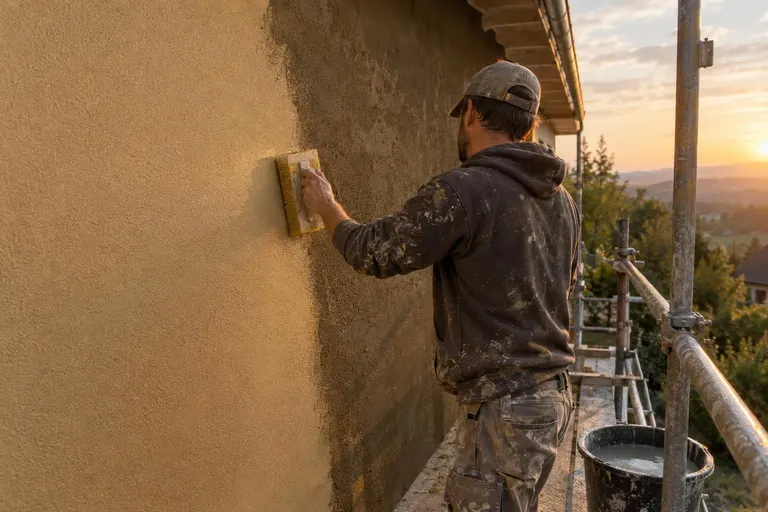
Matched to your board - 06
Walk it with you
We check lines, joints and details with you, clean up, explain care and leave you a plain note on what was done.

Reviewed together
Where is the wall? Watch the crew roll.
Pick your city, or tap a pin on the map. The truck leaves downtown Nashville and drives to you, with the distance and an illustrative drive time. We cover 28 Middle Tennessee cities.
- Nashville
- Williamson
- Rutherford, Wilson, Sumner
- West and South
- Straight-line distance
- Road miles, estimated
- Drive time, illustrative
- Neighborhoods we cover
An illustration from drive distance at an average of 45 mph once the truck is rolling. Real arrival depends on traffic, where the crew is working and the schedule, so call to confirm.
28 cities, one crew standard.
Find your city, or browse the regions. Every city page lists what we are called for most in that area.
Nashville and Davidson County
Williamson County
Rutherford, Wilson and Sumner
West and South of Nashville
A crew you can call.
Built the right way
Barrier, flashing, lath, screed and joints done correctly before a single coat goes on.
Hand-finished textures
Smooth, sand, dash, knockdown, skip trowel, lace and old-world finishes by experienced hands.
Photo estimates
A picture and a few questions get you a clear, itemized price in writing.
Water-smart details
Weep screeds, kick-outs and sealants that send water away from your wall.
Real samples
You approve texture and color on a full-size board in daylight, not a tiny chip.
Honest about limits
We say when a repair is cosmetic, when a wall needs testing and when it needs more than a patch.
Plain-English answers about stucco, repair and finishes.
Costs, textures, color, cracks, moisture and hiring, written for Middle Tennessee.
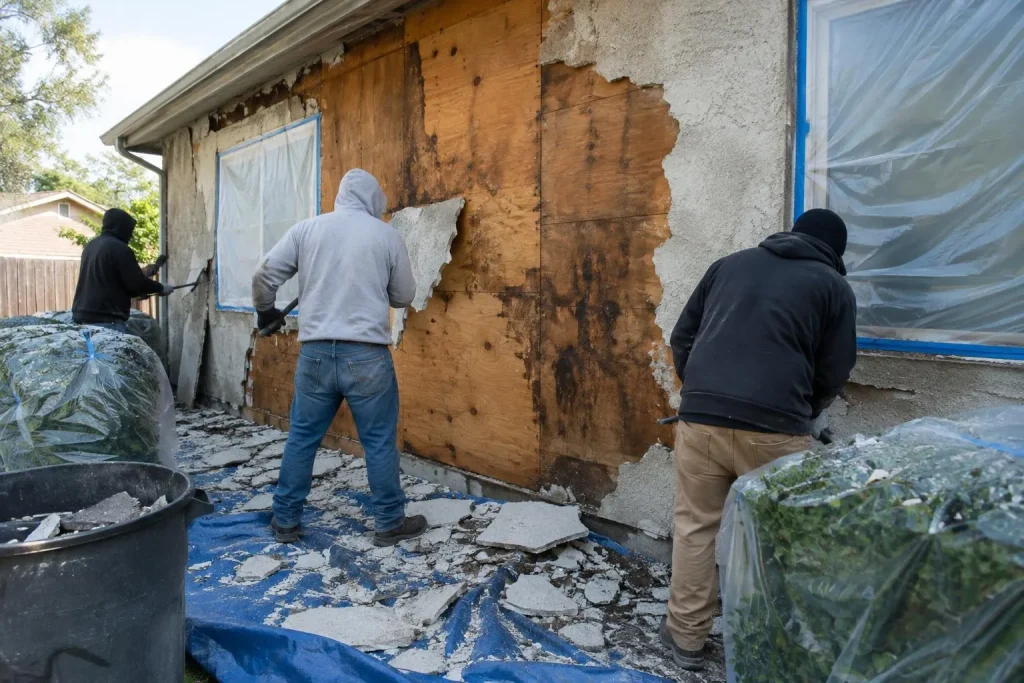 Costs & PlanningRepair, Recoat or Replace? How to Decide on Your StuccoA simple way to choose between patching, refreshing the finish and tearing off and starting over.
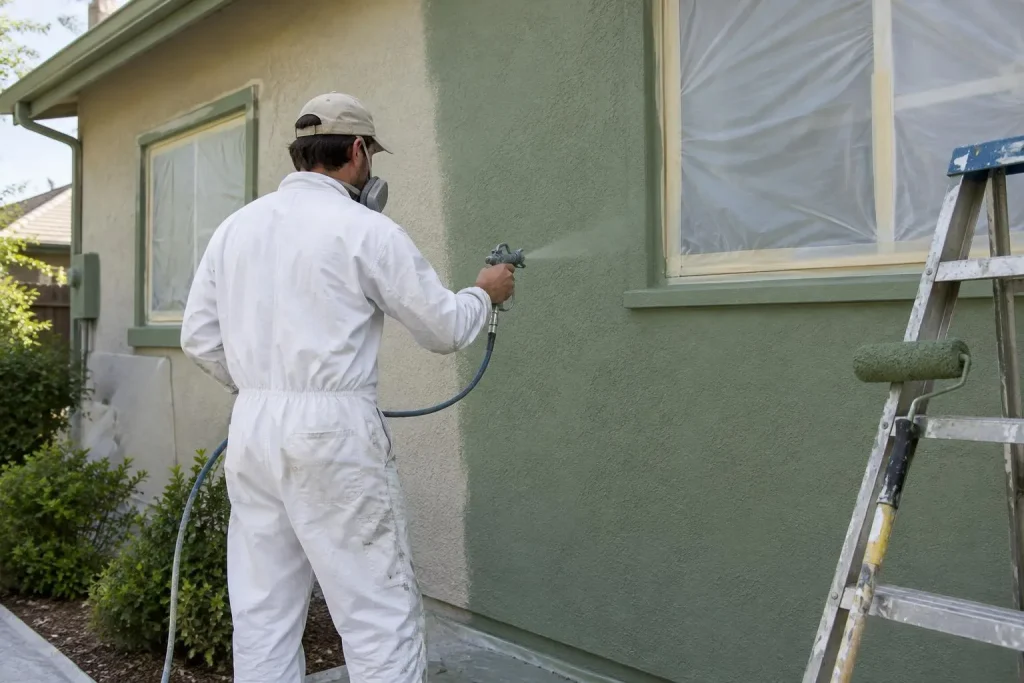 Repair & CareCan You Paint Stucco? What to Know Before You DoYes, but the prep and the paint matter. Here is how to avoid peeling and trapped moisture.
 Buying & HiringHow to Hire a Stucco Contractor You Can TrustQuestions to ask, red flags to watch for and what a good written estimate looks like.
Questions, answered
How much does stucco cost?
Commonly published installed prices run roughly $7 to $16 per square foot depending on the system, with EIFS and hand-troweled finishes toward the higher end. Repairs are priced by the job. Our Stucco Cost Estimator gives a first planning range, and a photo or a free visit gets you a written price.
How long does stucco last?
Well-built stucco commonly lasts for decades. What decides it is water management, movement control and maintenance: flashing, weep screeds, sealants, gutters and a yearly look at the wall. The color coat may need refreshing every several years to a decade.
What is the difference between stucco and EIFS?
Traditional stucco is a cement wall built in coats over metal lath. EIFS is foam insulation board covered with a reinforced base coat and an acrylic finish. They can look alike, but they are built differently and need different water-management details. We install and repair both and explain which fits your building.
Are cracks in stucco serious?
Most are not. Fine hairline cracks are common and usually cosmetic, but they should be sealed. Wide or growing cracks, stair-step cracks, cracks near stains or soft spots, and cracks with sticking doors or windows deserve a closer look. Our Crack Reader helps you read what you are seeing.
How do I know if there is water damage behind my stucco?
Look for dark streaks below windows and rooflines, bubbling paint, soft or crumbly stucco, a musty smell and stains on interior walls. A moisture meter and small probes find damage that cannot be seen. We document readings with photos so you can decide with facts.
Can you match my existing texture and color?
Usually very closely. We study the finish, build a sample board, test color in daylight and feather the repair beyond its edges. Because old stucco has weathered, we sometimes recommend recoating a whole wall plane for a perfectly even look.
Can stucco be painted?
Yes, when it is clean, sound and dry. Use breathable masonry coatings, or an elastomeric coating over hairline cracks on a dry wall. Cracks should be repaired and joints sealed first, or the paint fails early.
Do you work on new homes and additions?
Yes. We work with builders and owners on new homes, additions, garages and outbuildings, from plan review through barrier, lath, coats and finish. The earlier we see the details around windows, decks and rooflines, the better the wall performs.